Buyers arrive with a list. Ocean view or bay view. Zona Romantica or Marina. Fideicomiso, closing costs, capital gains, HOA fees, rental projections.
Then, usually somewhere between the second and third showing, the list stops and a different question arrives. It is asked quietly, and it is almost always the real question:
"What happens if I get sick here?"
I do not answer that one as an agent. I answer it as a patient.
That question decides more purchases than any amenity list. A buyer who is confident about medical care buys a home. A buyer who is uncertain buys a vacation condo and keeps their primary residence somewhere else, which is a very different transaction and a very different life.
My husband Chuck and I have lived in Puerto Vallarta for almost eight years, and every doctor either of us sees is here. I have also watched clients navigate everything from a routine consult to an emergency. What follows is what I have learned, including what my own care costs, checked against current sources, with the figures dated so you know how fresh they are. Where the popular expat wisdom is out of date, I say so.
Start here: there are three ways to pay for care in Mexico
Almost every confusing conversation about Mexican healthcare comes from mixing these three up. They are separate systems with separate rules.
1. Private care, paid out of pocket. You call a private doctor, you see them, you pay at the desk. No insurance involved. For routine care, this is what most foreign residents in the bay actually do, because the cash prices are low enough that insurance is not worth the paperwork.
2. Private care, paid by insurance. This is what you need for the event that would otherwise be financially serious: a cardiac episode, a bad accident, a cancer diagnosis. Either a Mexican major medical policy, an international policy, or travel medical coverage.
3. The public system. IMSS, ISSSTE, IMSS-Bienestar, and state health services. Foreigners with legal residency can access parts of it, and this is where the bay gets interesting.
Most people who move here end up using all three in different circumstances. The mistake is assuming one of them covers everything.
The Banderas Bay split that nobody explains to buyers
Here is something you will not read in most relocation articles, and it directly affects where you buy.
Banderas Bay spans two states. Puerto Vallarta is in Jalisco. Nuevo Vallarta, Bucerias, La Cruz de Huanacaxtle, Sayulita and Punta Mita are in Nayarit. Everyone knows this affects property taxes and permits. Fewer people know it affects public healthcare.
Mexico has been consolidating its public health services for people without formal social security into a federal program called IMSS-Bienestar, which is free at the point of service in participating states. Nayarit joined. Jalisco did not. As of January 2026, Jalisco remains one of eight states that has not integrated into IMSS-Bienestar, along with Nuevo Leon, Coahuila, Durango, Queretaro, Aguascalientes, Chihuahua and Guanajuato.
Practically, this means public care in Puerto Vallarta runs through Jalisco's own state health services and the regional hospital system, where modest fees are still common, while public care across the bridge in Nayarit runs through the federal IMSS-Bienestar model.
I want to be careful here, because this is exactly the kind of detail that gets repeated wrong. The old expat line was "there is no free healthcare in Mexico, everyone pays something." That was closer to true a few years ago, and in Jalisco it still has some truth to it. It is no longer accurate as a blanket statement about the country. The honest version is that it depends on which state you are standing in, and around this bay, the answer changes when you cross the Ameca River.
For most of my buyers this is academic, because they will use private care. But if you are planning a long retirement here on a fixed income, it is worth understanding which side of the bay you are buying on.
IMSS voluntary enrollment: cheaper than you think, stricter than you think
Legal residents of Mexico, temporary or permanent, can enroll voluntarily in IMSS through the program called Seguro de Salud para la Familia, commonly known as Modalidad 33. The premium is set by age, not by your medical history.
The published 2026 annual quotas:
| Age | Annual cost (MXN) | Approx. USD |
|---|---|---|
| 0 to 19 | $9,300 | $545 |
| 20 to 29 | $11,550 | $680 |
| 30 to 39 | $12,350 | $725 |
| 40 to 49 | $14,350 | $845 |
| 50 to 59 | $14,850 | $875 |
| 60 to 69 | $20,600 | $1,210 |
| 70 to 79 | $21,500 | $1,265 |
| 80 and over | $22,150 | $1,305 |
USD figures are approximate, converted at roughly 17 pesos to the dollar as of September 2026.
Roughly $1,200 a year for comprehensive coverage in your sixties sounds too good to be true, and there is a catch worth understanding before you build a plan around it.
IMSS applies pre-existing condition rules. Reporting indicates that applicants with a history of malignant cancer, chronic kidney failure, advanced diabetes with complications, severe heart disease or HIV are declined, and that a range of other conditions carry waiting periods of one to two years before coverage applies. You also need a CURP, valid identification and proof of address to enroll.
What I tell clients: if IMSS is part of your plan, enroll early, while you are healthy, and treat it as a backstop rather than your only coverage. Many full-time residents here carry IMSS and a private policy, and use private care for anything they want handled quickly.
Also, a small correction to a spelling that appears in almost every expat article: the public system for state workers is ISSSTE, with three S's. If you are researching, that spelling will get you better results.
Private hospitals in Banderas Bay
You will hear people say there are eight private hospitals in the bay. The number moves as facilities open, rebrand and expand, so rather than quote a count, here is a current list with locations:
| Hospital | Location | Phone |
|---|---|---|
| Hospital San Javier Marina | Fco. Medina Ascencio 2760, Hotel Zone, Puerto Vallarta | (322) 226-1010 |
| AmeriMed American Hospital | Blvd. Fco. Medina Ascencio, Plaza Neptuno, Marina Vallarta | (322) 226-2080 |
| CMQ Hospital de Vallarta | Basilio Badillo 365, Emiliano Zapata, Old Town | (322) 223-1919 |
| CMQ Premiere Hospital | Francisco Villa 1749, Vallarta Villas | (322) 226-6500 |
| Cornerstone Hospital | Los Tules 136, Gustavo Diaz Ordaz | (322) 226-3700 |
| Medasist Hospital | Manuel M. Dieguez 360, Emiliano Zapata, Old Town | (322) 223-0656 |
| Hospital Versalles | Lucerna 145, Col. Versalles | (322) 293-7394 |
| Alto Nivel en Atencion Especial (CMQ emergency) | Basilio Badillo 365, Old Town | (322) 223-4738 |
| Punta Mita Hospital | Carretera Federal 200 Km 19, Punta de Mita, Nayarit | (329) 688-0068 |
| Hospital Joya Riviera | Paseo de los Cocoteros at Paseo de las Garzas, Nuevo Nayarit | (322) 226-8181 |
| Hospital CMQ Riviera Nayarit | Av. Heroes de Nacozari 280, Bucerias, Nayarit | (329) 298-0717 |
Public facilities include the IMSS Hospital General on Fco. Medina Ascencio and the Hospital Regional in Pitillal.
The emergency number throughout Mexico is 911, and operators in Puerto Vallarta commonly handle calls in English.
A word of advice that has nothing to do with lists: pick your hospital before you need it. Know which one is closest to your home, know whether your insurance pays them directly, and put the number in your phone. I ask every client who closes on a home here to do this in their first week.
What care actually costs
I can give you market ranges, and I will. But I would rather start with my own receipts, because I have been paying them for eight years.
My annual physical, start to finish
My husband Chuck and I see the same primary care physician. He went to medical school in Mexico City and did his internship in New York. We go together and we are seen together.
The consult: 500 pesos, about $29. He writes the order for a very thorough annual blood panel.
The lab work: roughly $150. Blood draw, urinalysis, the full panel. The results are in our inbox within a few hours.
The review visit: no charge. We go back and he walks us through every line of the results.
Cardiology: about $125. We take those same results to our cardiologist, who does an EKG and a full check.
Total for a complete annual physical with a comprehensive blood panel, EKG and cardiology consult: a little over $300 per person.
I have both of those physicians' personal WhatsApp numbers.
Dentistry
About $30 per visit, twice a year. Two things surprise North Americans. There are no dental hygienists in Mexico, so your teeth are cleaned by the dentist herself, not handed off. And in eight years, mine has never once tried to sell me a water pick, a whitening package or anything else. Her office is genuinely state of the art. Chuck's line is that she takes each tooth out, cleans it, and puts it back.
I schedule my appointments with her over WhatsApp.
Dermatology
Chuck and I go twice a year. Head to toe skin check, a few sun spots frozen off each of us, $140 each. If you are moving to a place at this latitude and you are fair, put this one in your calendar permanently. It is the appointment most newcomers skip and the one this climate makes least optional.
The market ranges
For planning purposes, and because your experience will vary by physician and neighborhood:
- General practitioner: a few hundred pesos, less at pharmacy-adjacent clinics
- Specialist consultation: roughly 800 to 1,500 pesos, about $47 to $88 USD, with concierge and house-call services higher
- Routine lab work: often under 1,000 pesos
- Major procedures: commonly reported at 50 to 80 percent below US prices, with a hip replacement quoted around $12,000 USD in Mexico against roughly $40,000 in the United States
You will still see "500 to 900 pesos for a specialist" repeated in expat Facebook groups. That range was accurate several years ago and has not kept up. Two things pushed prices up: the equipment got better, and demand from foreign patients grew. Both are good news for quality and mildly bad news for the bargain-hunting version of this conversation.
One honest caveat on all of the above. Those are cash prices for routine, planned, outpatient care, and cash works beautifully right up until it does not. Everything in this section is what maintenance costs. Insurance is for the day something is not maintenance, which is the next section.
Insurance: what we actually carry, and why
Chuck and I hold an international policy through Cigna with a $10,000 deductible. It covers us anywhere in the world except the United States. For the four or five weeks a year we spend back in the States, we buy a separate travel policy for the trip.
That structure follows directly from the numbers above. If a full annual physical with cardiology is $300 and a set of stitches is $80, then routine care never comes near a deductible and it should not. We pay cash for everything that is maintenance and carry insurance for the day something is not.
The honest caveat: a $10,000 deductible means self-funding anything short of a real emergency. If you cannot absorb that number comfortably, this is the wrong structure for you, and you should be paying a higher premium for a lower deductible. That is a conversation with an insurance broker, not with a real estate agent, and I am happy to point you to the ones my clients use.
The thing almost nobody knows going in: most international and expat policies exclude the United States, because American pricing would break the underwriting. This surprises people badly, usually at the worst moment. If you plan to spend meaningful time back home, budget separately for travel coverage. It is not a gap in the policy. It is how these policies are designed.
The question that matters more than the carrier: does your policy pay a Banderas Bay hospital directly, or do you front a deposit and file for reimbursement? Private hospitals here commonly require a deposit on admission, reported anywhere from a few hundred to several thousand dollars. A policy that settles directly with the hospital is worth considerably more than an identical policy that reimburses you eight weeks later. Ask, in writing, and ask about the specific hospital by name.
Public options: permanent residents can also use the Salud, the public health department, and most vaccines there are free. We have used it. More on that in a moment.
What urgent care actually looked like for us
The abstract version of this is unconvincing, so here is the real one.
Chuck was hammer drilling at home one evening, right before we were due at dinner with guests. His hand slipped and he very nearly took his finger off. He sent me ahead to the restaurant and went to the private hospital near our house. They took him straight back, cleaned the wound, put in four stitches and sent him home. Total cost, about $80. He arrived at the restaurant before we had started eating.
No appointment, no referral, no wait, and well under any deductible.
The hospital asked when he had last had a tetanus shot. He could not remember. They would have given him one on the spot but were out, so they wrote a prescription and told him to go to any Salud, where it would be free.
All of that was handled in English. The next day at the Salud, none of it was. We got our shots, they filled out our record cards in Spanish, and we did not think to read them until lunch, when we ran them through a translate app. Chuck's card had the box ticked next to influenza. Mine had hepatitis. To this day we are not certain what we were given.
The care was excellent. The paperwork was in a language we did not read. Both of those things are true, and the second one is the practical lesson: learn some Spanish, or at least run the document through your phone before you leave the building.
One practical note on private hospitals: an upfront deposit is standard for admission, and reported deposits range from a few hundred to several thousand dollars. This is where insurance that pays the hospital directly is worth far more than insurance that reimburses you later.
Doctors, training, and time
There is one thing about medical care here that clients mention to me more than cost, and it is the consultation itself.
Appointments are not run on a stopwatch. Chuck and I have never had one of these visits last less than an hour, and we are seen together, in the same room, every time. Family members come in as a matter of course. Nobody hurries you toward the door, and I have sat in consults that ran well past the scheduled time with a full waiting room outside because the doctor was still answering questions.
If you have spent the last decade getting eleven minutes with a physician who is typing the whole time, this is the difference you will notice first. It is also the thing I cannot convince anyone of in advance. You have to sit in one.
The other adjustment is access. Both of my physicians gave me their personal WhatsApp numbers, and my dentist takes appointment requests the same way. That is normal here and it is startling to newcomers.
On training: Mexican medical and dental schools are rigorous, degrees require substantial supervised clinical training, and specialists here routinely attend international conferences in their fields. On language, I will be honest rather than sweeping. In a destination like Vallarta, where a large share of patients are foreign residents and visitors, many physicians and most of the ones who build a practice around that clientele speak strong English, and English-language texts are common in Mexican medical education. That is not a guarantee for every doctor in every clinic. Ask when you book. Any good office will tell you plainly.
Specialists, and the one time you leave the bay
The most common objection I hear from skeptical buyers is that routine care may be fine, but serious or specialized medicine must require going home. It is worth answering carefully, because the truth is more interesting than either the fear or the sales pitch.
Banderas Bay supports a very large foreign resident population, and the specialist market has grown to match it. Clinics run constantly. In recent weeks Chuck and I have seen an oncologist for a straightforward preventive checkup, a history and an examination, for $30, and an optometrist for a full eye exam, air puff and eye chart and all of it, for $35 each. That optometrist also sourced bifocal contact lenses I had struggled to find locally, at $95 for a six month supply.
Healthcare as a building amenity
A small number of communities around the bay have built medical access into the property itself. Almost no buyer thinks to ask about this, and it is one of the few healthcare questions that attaches to a specific address rather than to the region.
Marina Towers, in Marina Vallarta, is the clearest example of the amenity approach. I sat in on their presentation last week, and it is not a project I represent. Their own published materials commit to 24 hour on-site medical services provided by SANMARÉ Health-Care Group, a Puerto Vallarta healthcare group that operates its own around-the-clock ambulance service. That is a developer commitment attached to a building still coming to market, so verify it during due diligence rather than assuming it is running today. It is still an unusual thing to see written into an amenity list.
The more common version is proximity rather than contract: a community large enough that a full hospital sits inside it or at its edge.
Punta Mita is served by Punta Mita Hospital, located within the master-planned resort, which operates intensive care ambulances equipped with ventilators. Residents of the communities inside the gates, among them Hacienda de Mita, Las Terrazas, Las Palmas at Punta Mita and Porta Fortuna, are minutes from a full emergency facility.
Nuevo Nayarit, the large master-planned area that includes Paradise Village, has Hospital Joya Riviera essentially at its center, on Paseo de los Cocoteros at Paseo de las Garzas, with 24 hour emergency care, an ICU and imaging. For a great many residents there, the hospital is a short drive from the front door.
Bucerias has Hospital CMQ Riviera Nayarit on Heroes de Nacozari, with a 24 hour emergency area, an ICU and both ground and air ambulance transport.
Beyond these, arrangements vary building by building and are almost never mentioned in a listing. If healthcare access matters to you, ask me and I will find out for any property you are considering.
The honest limit: for genuinely rare conditions, you may travel. Someone I know here sees a specialist in Mexico City for an uncommon condition and flies to her appointments. She tells me the round trip costs her under $100.
That is the accurate shape of the answer. Common specialties are well covered in the bay. Truly subspecialized care may mean Guadalajara or Mexico City, both of which are short, inexpensive domestic flights, and both of which are serious medical cities. It is a travel day, not a crisis, and for many people it compares favorably with driving three hours to a regional center in the United States or Canada and paying twenty times more at the end of it.
If you want the shortest honest version of all of this: you can get excellent healthcare in a great many places. What is distinctive about the United States is the price.
Pharmacies and prescriptions: what changed
The old story was that you could buy nearly anything over the counter in Mexico. Parts of that are still true, and parts are now wrong.
Still widely available without a prescription: many chronic-care medications that require a prescription in the United States, including common blood pressure medications, statins, thyroid hormone, several diabetes treatments, birth control and acid reflux drugs. Prices are typically far below US retail.
Requires a prescription: antibiotics have required a written prescription from a licensed Mexican physician since 2010, and the pharmacy keeps the copy.
Requires a special controlled prescription: anti-anxiety and sleep medications such as alprazolam, clonazepam and zolpidem, ADHD stimulants such as methylphenidate, and, as of 14 July 2026, tramadol, which was reclassified as a controlled medication.
Not available: Adderall cannot be legally sold or imported into Mexico, and strong opioids such as oxycodone are restricted to hospital use.
If you take a controlled medication daily, sort this out before you move, not after. Establish with a local physician who can write your prescriptions here. It is a one-appointment problem if you handle it early and a genuinely stressful one if you do not.
Medical tourism in the bay
Puerto Vallarta and Riviera Nayarit are part of a national picture in which roughly 1.2 million international patients travel to Mexico each year, drawn by savings commonly reported between 50 and 80 percent on major procedures.
What has changed locally is the mix. It used to be almost entirely cosmetic and bariatric surgery. Now people come for joint replacements, hernia repair, cardiac work, and a great deal of dental care, and increasingly they combine the trip with time in a home they own or rent here.
For owners, this matters in a specific way: I have clients who bought here partly because a planned procedure and a six-week recovery in a warm place with an ocean view costs less, all in, than the same procedure alone at home.
Wait times, honestly
The reason many people move care here is speed. In my experience and in what clients report back to me, consults, imaging and elective surgery in the private system are typically scheduled in days rather than the months people are used to at home.
I am not going to promise you "a day or two, tops," which is the version you will see written elsewhere. It depends on the specialist, the season and the procedure. But the difference in scheduling between private care here and public systems in the US and Canada is real, and it is one of the most common things clients tell me they did not expect.
What I tell buyers to do before they close
This is the short list I walk through with every client who is moving here full time.
- Confirm your insurance situation in writing. Ask specifically whether the policy pays Banderas Bay hospitals directly or reimburses you afterward. Get the hospital's name confirmed by the insurer, not by an agent's memory.
- Check what your home-country coverage does abroad, and what your new policy does at home. For Americans, Medicare generally does not cover care in Mexico. And most international policies written for residents of Mexico exclude the United States, so plan on separate travel coverage for trips back.
- Get quotes on a Mexican major medical policy while you are healthy. Age and pre-existing conditions drive both price and eligibility, and both get worse with waiting.
- Decide about IMSS early. If it is part of your plan, enroll before conditions develop.
- Choose your hospital and your primary physician in the first month. Not after the first emergency.
- Resolve prescriptions before the move, especially controlled medications.
- Understand which side of the bay you are buying on if the public system is part of your long-term plan.
- Ask whether the building has on-site paramedic or ambulance service. Some do, it varies, and it is almost never in the listing. Ask me and I will find out for any property you are considering.
- Keep a medical file in Spanish. A one-page summary of conditions, medications and allergies, translated, in your wallet and on your phone.
If you want, I will walk through this list with you as part of the buying process. It is not a service I charge for. It is part of understanding whether the life you are picturing here actually works, which is the only thing that makes a purchase a good one.
A note on why this matters to a real estate decision
I could sell homes here without ever discussing hospitals. Plenty of agents do.
But the people who are happiest with what they bought in Puerto Vallarta are the ones who understood the whole life before they signed: the healthcare, the residency, the taxes, the seasons, the neighborhood at 2 a.m. as well as at 2 p.m. The people who struggle are the ones who bought a view and discovered the rest afterward.
Healthcare is usually the biggest unknown on that list, and it is almost always better than people fear. It just needs to be understood accurately rather than optimistically.
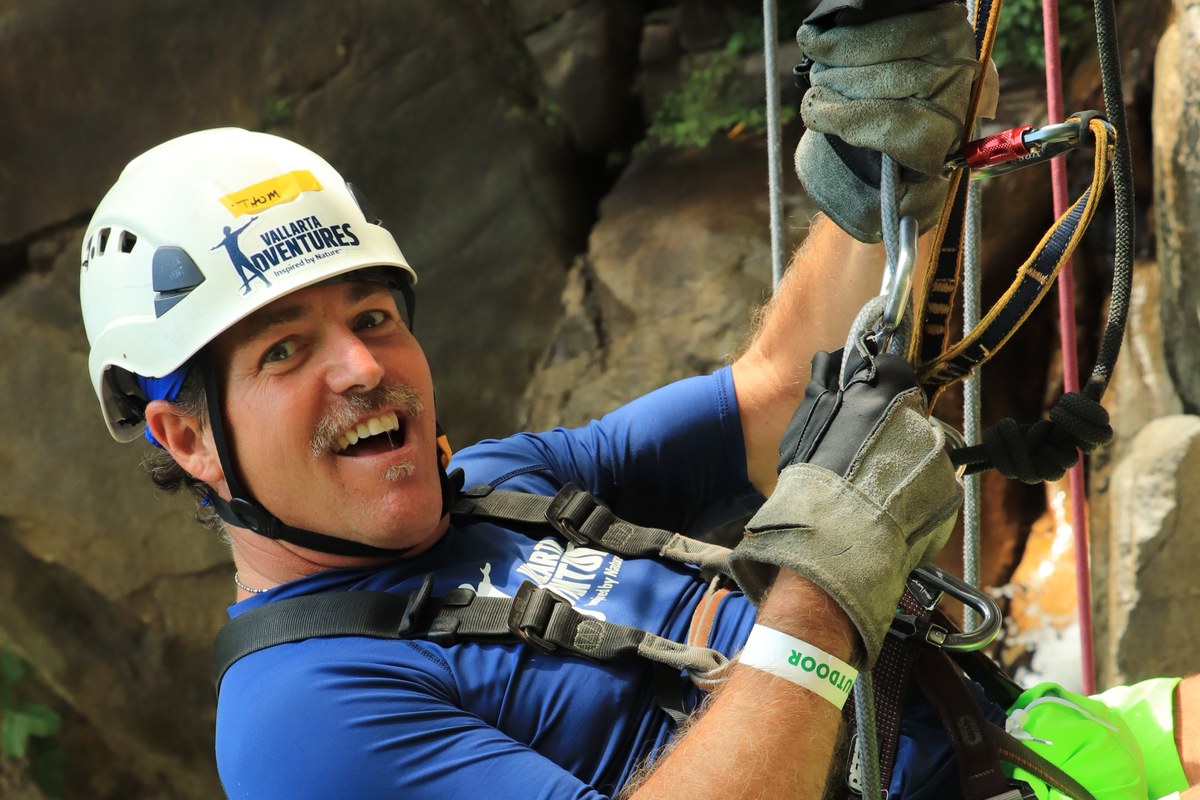
Eight years in, I would not trade any of it. But we moved here having checked it, not having assumed it. That is what lets me clip into a rope over a waterfall and not think twice about it.
If you are weighing a move to Banderas Bay and want to talk through any of this, reach out. I am happy to point you toward the physicians, insurance brokers and hospital contacts my own clients use.
Tom Gordon
Coldwell Banker La Costa, Puerto Vallarta
Hannah Lopez & Tom Gordon Team
Coldwell Banker Global Luxury · CLHMS · AMPI
tom.gordon@luxuryvallartarealty.com
+1 512 569 6371
luxuryvallartarealty.com
Disclaimer: This article is general relocation information for prospective residents and property buyers in Puerto Vallarta and Riviera Nayarit. It is not medical, insurance, tax or legal advice. Costs, program rules, hospital services and medication regulations change. Confirm current details with the relevant provider, insurer or government agency before making decisions.
Last reviewed: September 2026.